“I’m nervous about the new job, but mostly excited.”
loopn
AI that grows with you.
Your life’s memory.
Loopn is an AI you talk to about your life. It remembers the people you mention, how you felt, and everything that came before.
iOS and Android · available now
“Work is taking over more than I expected.”
“I don’t think I feel the same way anymore.”
Loopn noticed the change between them.
You already talk to AI about your life. But the context is shallow, and every uncertainty becomes something to solve.
most chatbots remember your chats. loopn remembers your life.
Your people. Your feelings. No judgment.
It keeps the people you mention, and how you felt about them, held over time — the quiet shifts you would never catch on your own.
aisha · sister · 8 memories
the conversation compounds
it does not start over every time.
Loopn remembers the people, feelings, and unfinished thoughts behind what you say. The longer you use it, the less you have to explain — and the more it has to notice with.
It remembers the question behind the question.
I’m not sure whether I should take the job.
loopnWhat makes you uncertain about it?
They offered me another role today.
loopnLast time, the opportunity excited you. What held you back was the kind of life you thought it would require. Does this one feel different?
I should be happy about this.
loopnYou wrote “should be happy” in March as well, about this job. You stopped writing it after May.
I think I’m going to say no.
loopnThe last time you turned something like this down, you were twenty-nine. You wrote that you felt sick for a week. Then, months later, that it was the first thing you had ever done only for yourself. Do you want me to find it?
Nothing in the first week is clever. It only knows what you have told it. That is the point — everything Loopn can eventually say is built out of your own words, kept in order.
the sunday loop
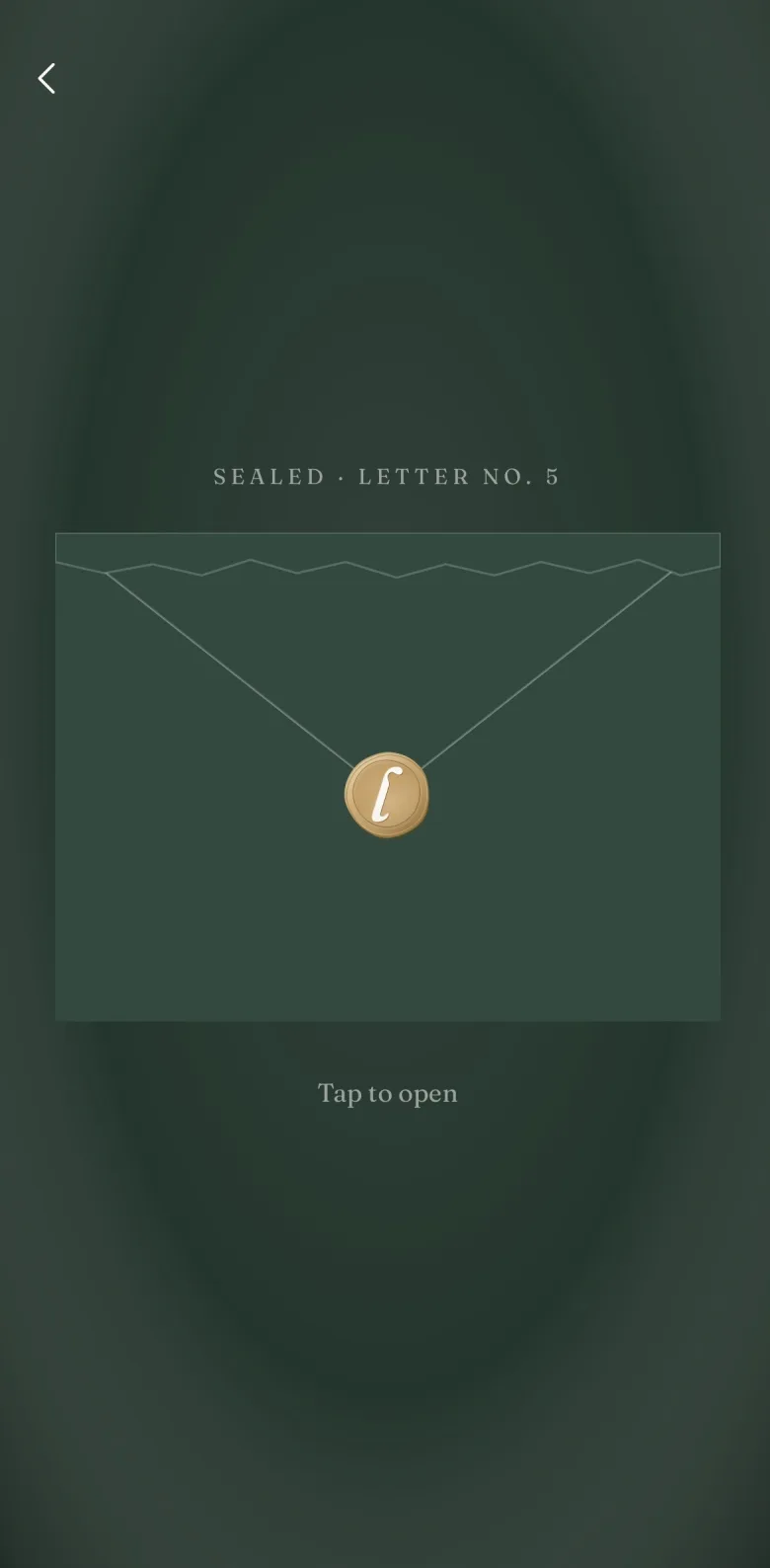
every sunday, a letter mapping the shifts and feelings of your week.
Your week returns with the longer story attached — what repeated, what shifted, and what you may be getting ready to say. About two minutes to read.
Loopn can notice the change. You decide what it means.
a look inside
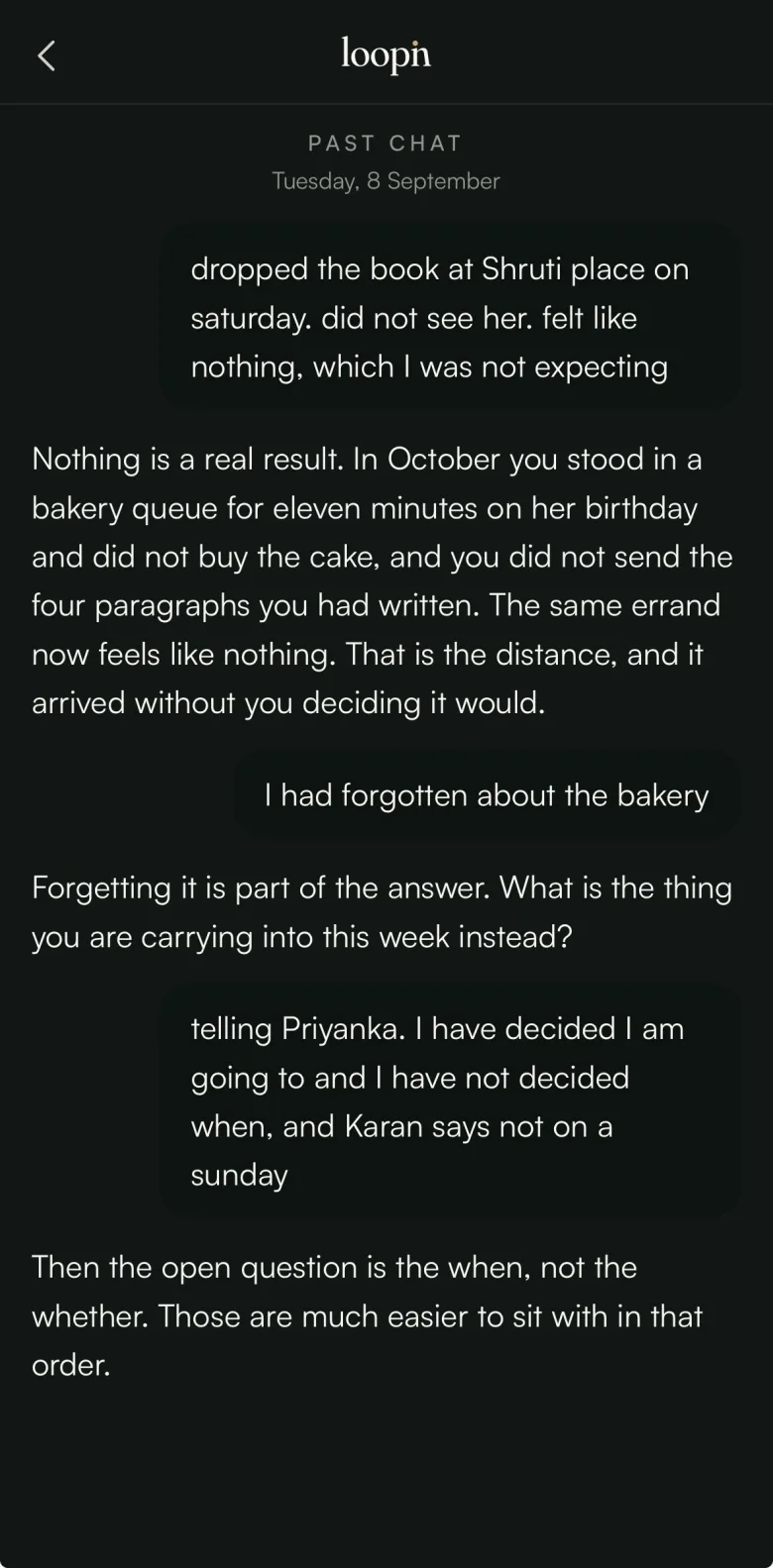
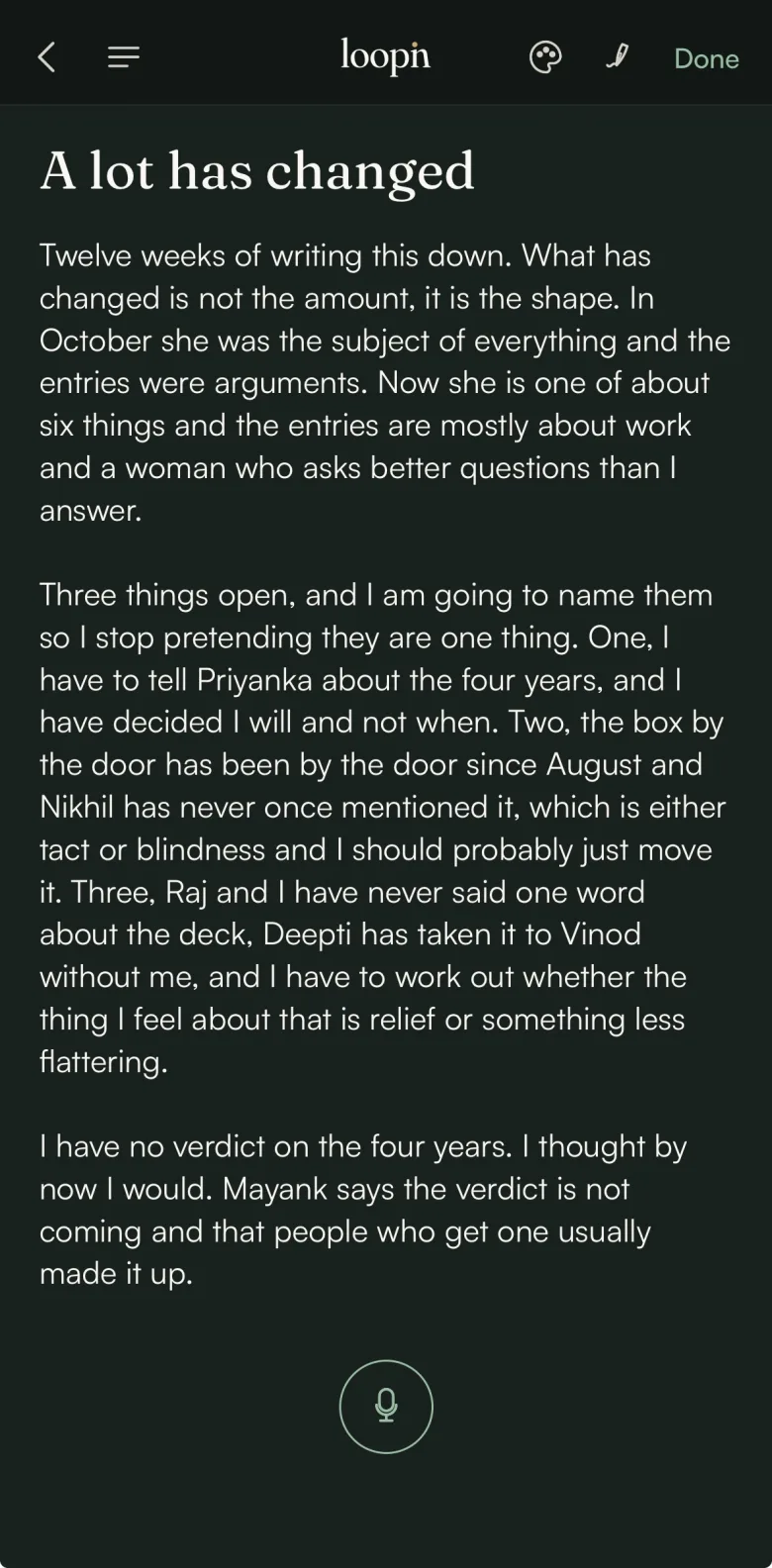
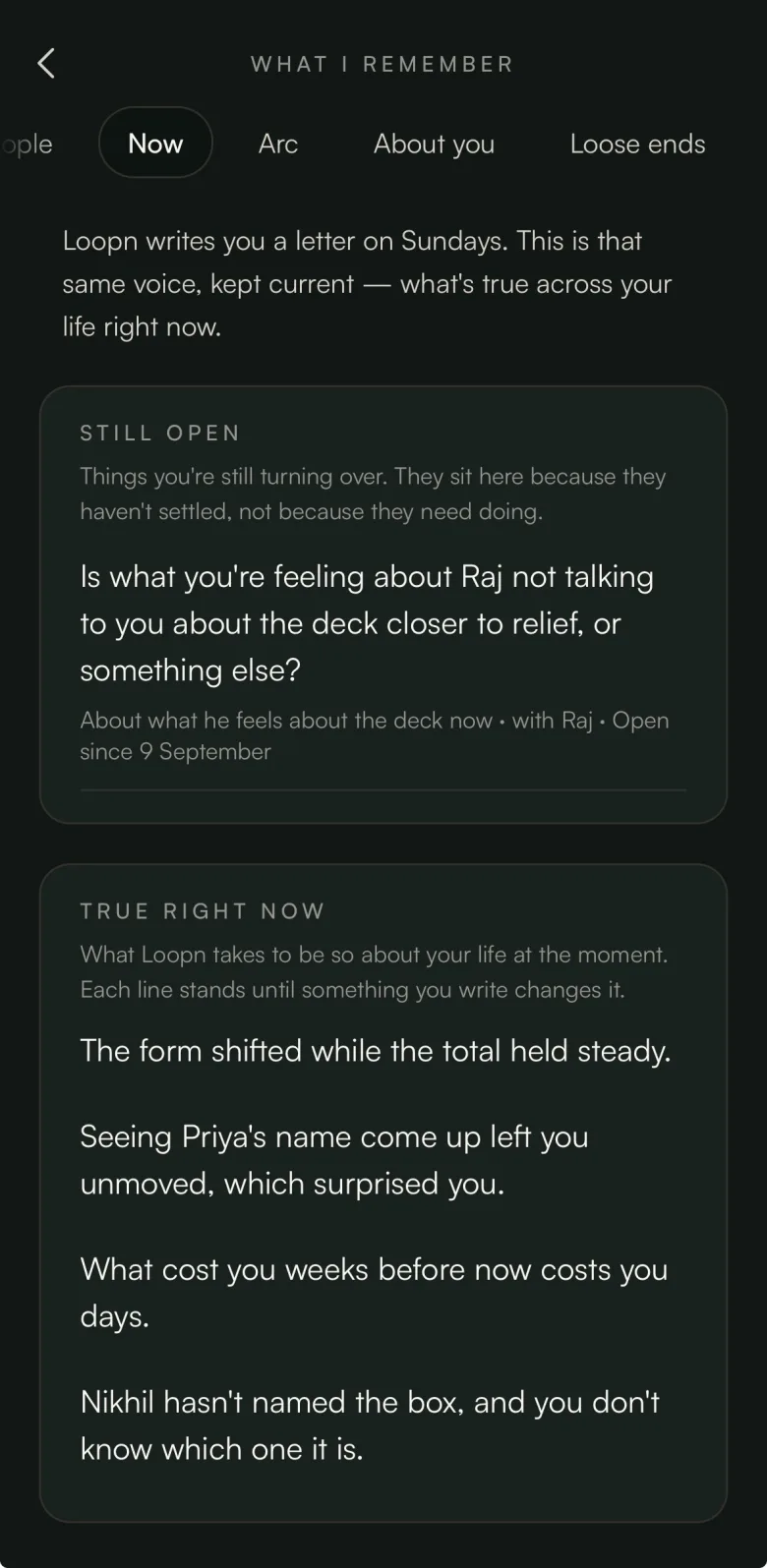
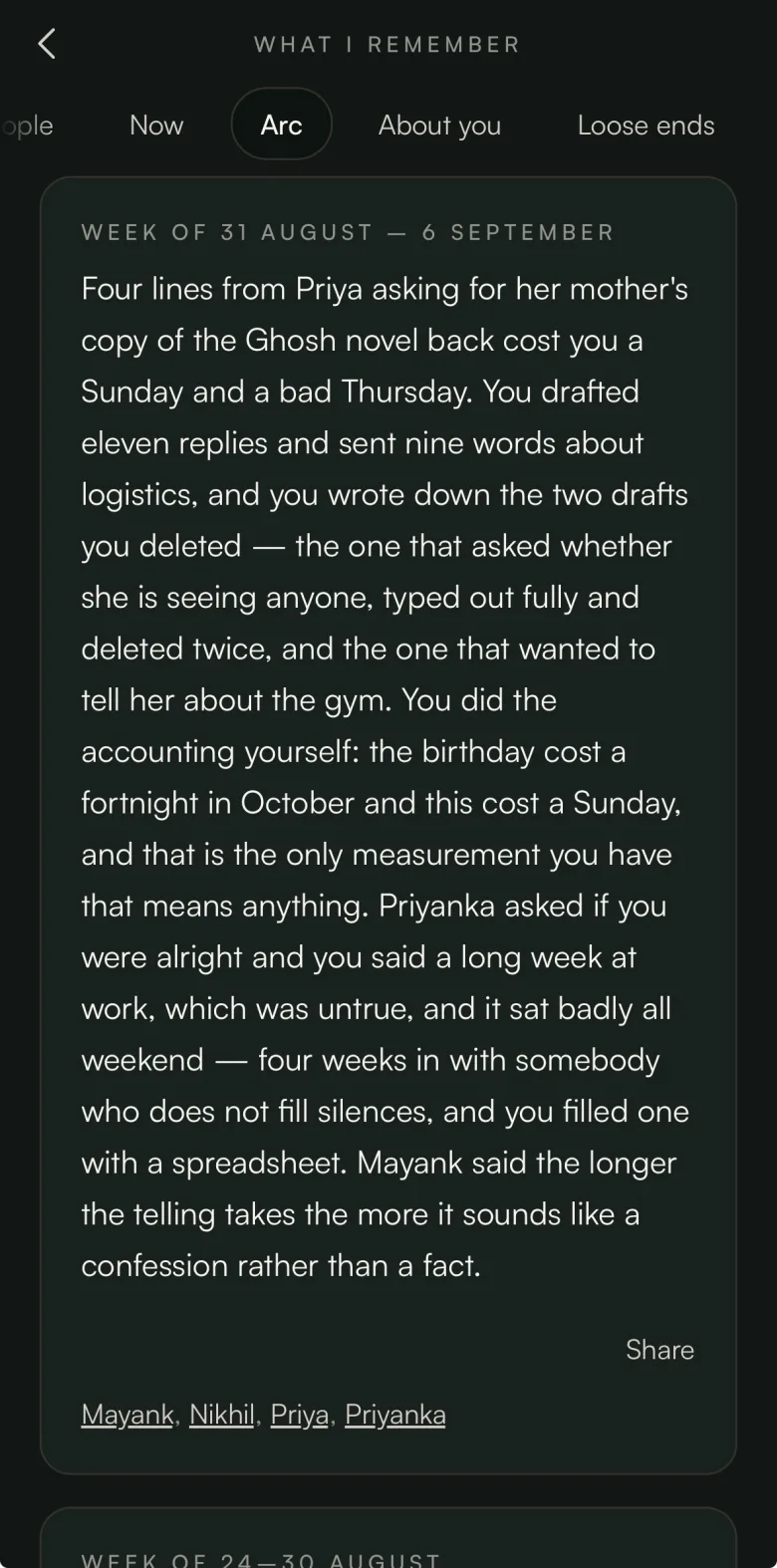
A glimpse of the app itself.
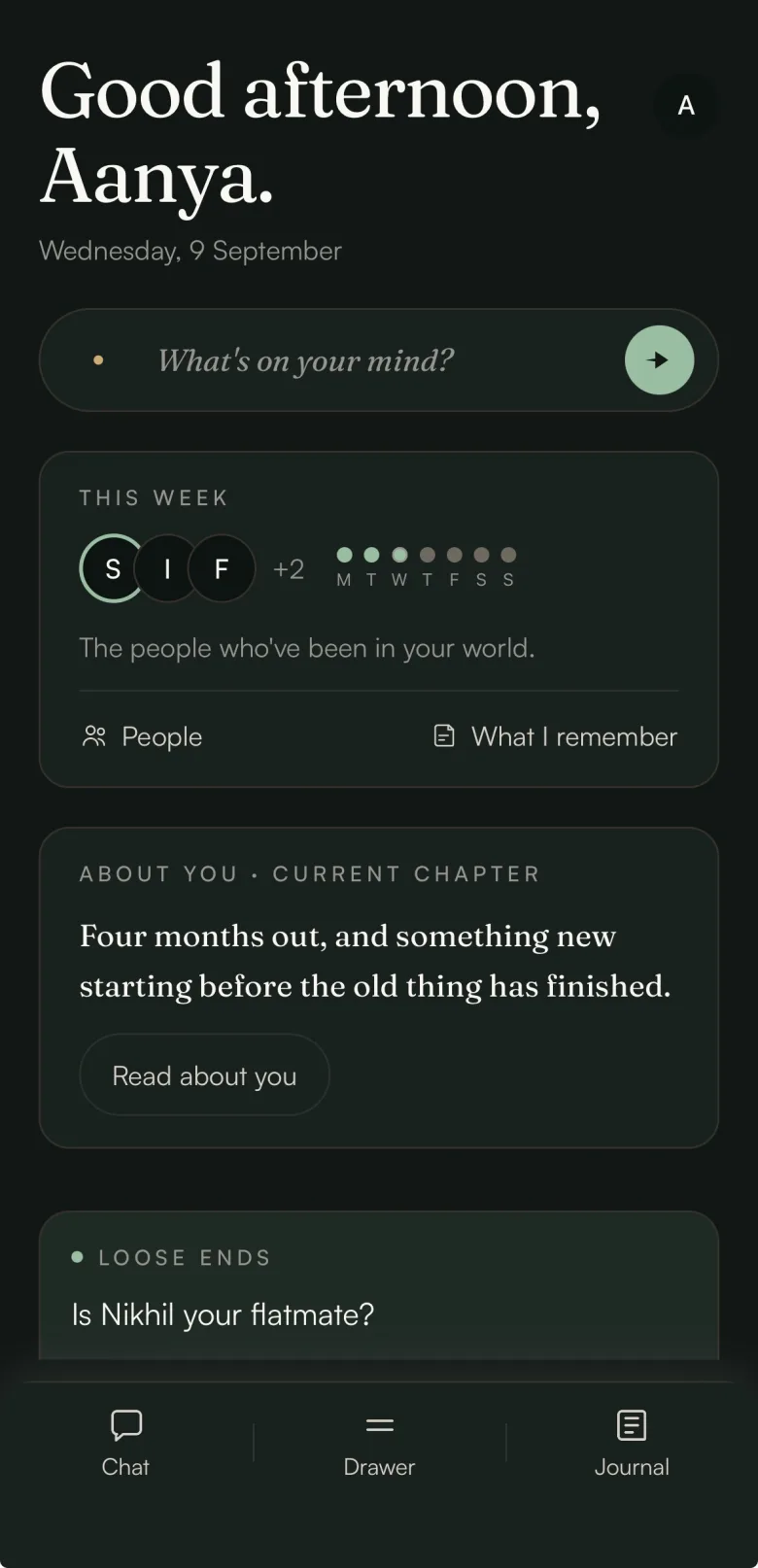
Home, at the end of the day
A quiet greeting, the week so far, and Sunday’s letter on its way.
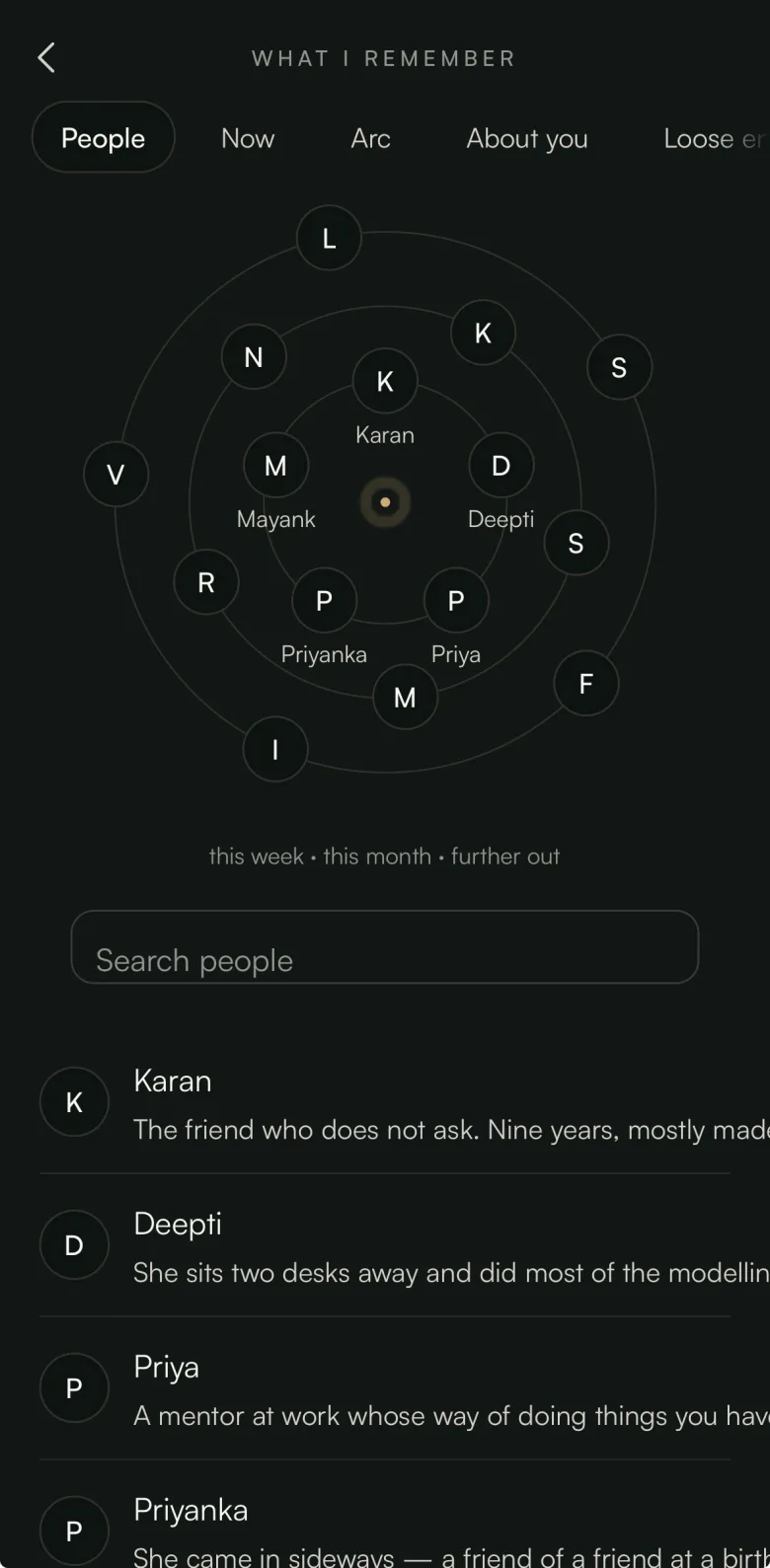
The people around you
Closer in when they’re on your mind, further out as the weeks pass.
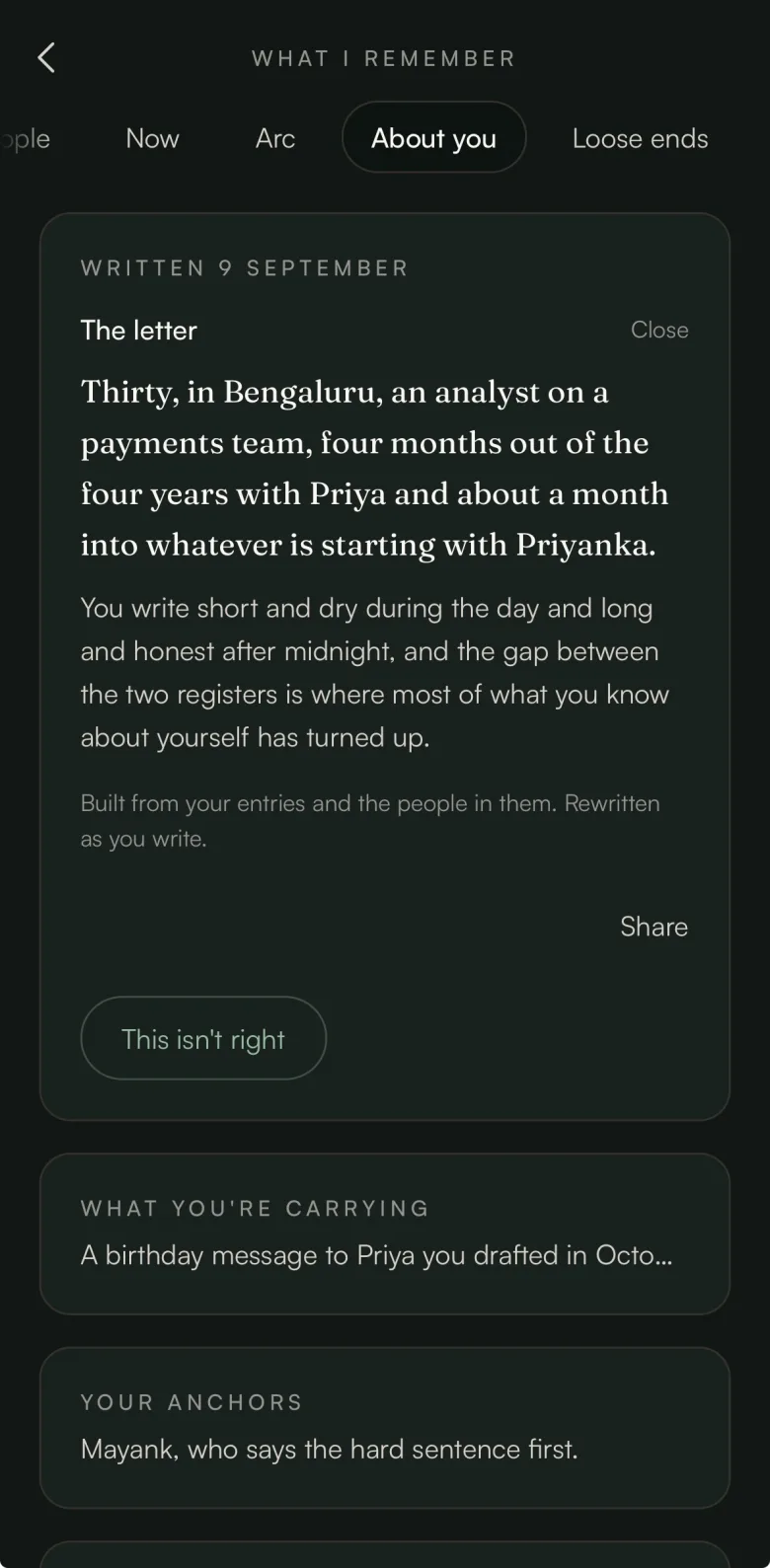
About you, in the current chapter
Built from what you’ve written, not a form you filled in.
A conversation that remembers
An old entry turns up in tonight’s reply, unasked for.
A page of your own
For the nights when it’s just you and the words.
What’s true right now
A read on the present, held loosely, until you write something that changes it.
A person’s arc, over time
The shape of how someone’s sat with you, built week by week.
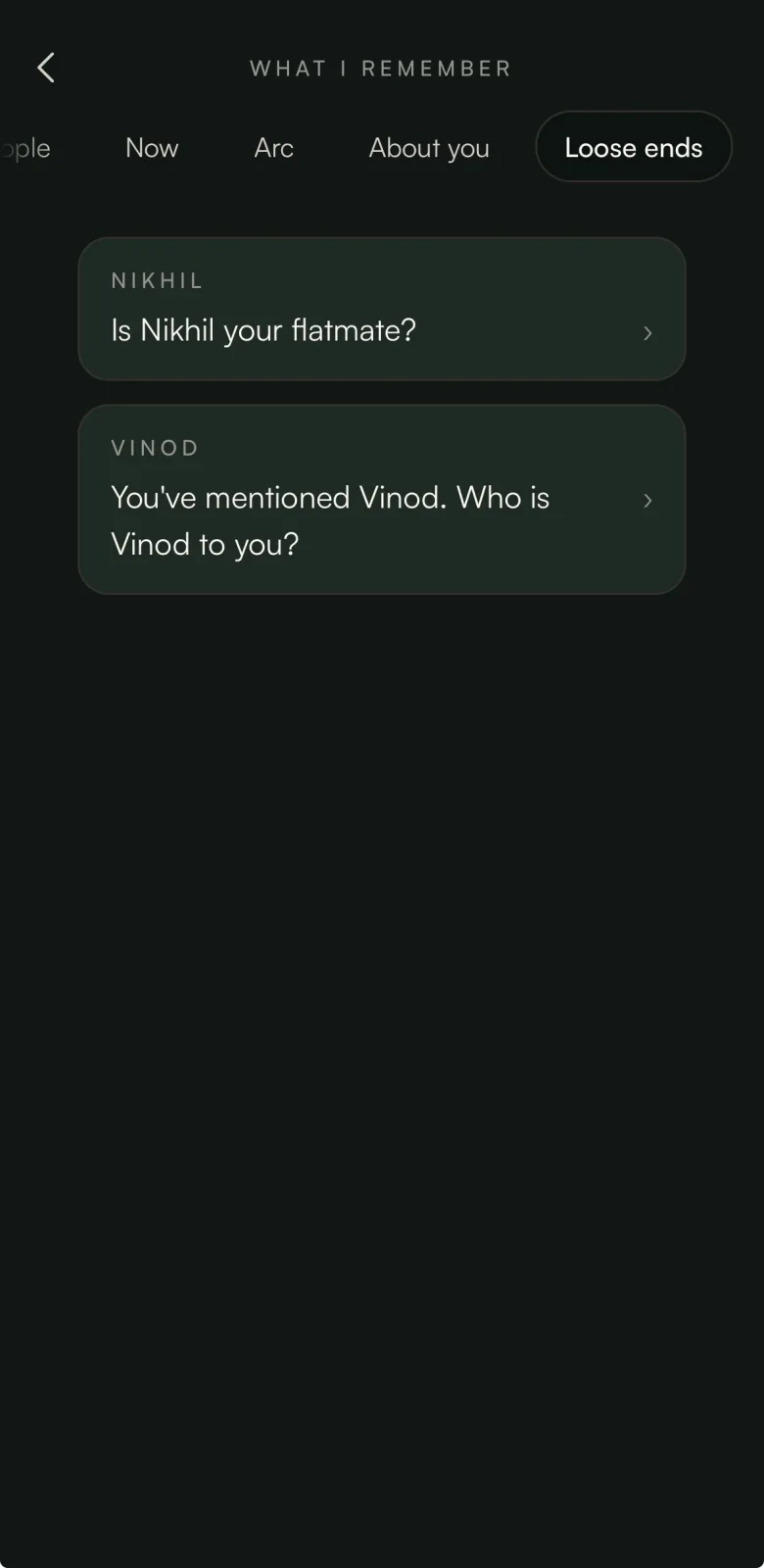
The loose ends you left
A gentle nudge back to something you mentioned once and moved on from.
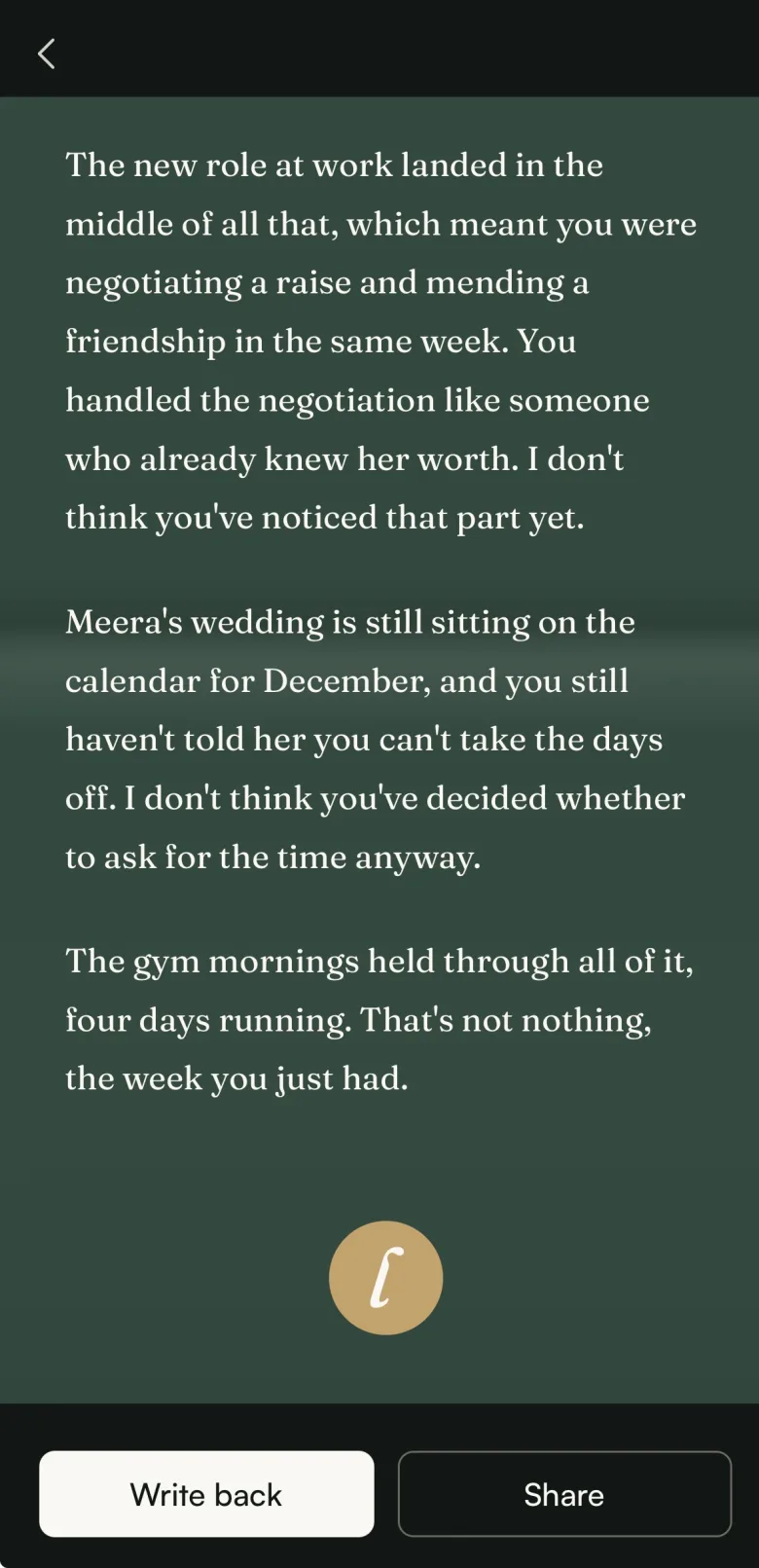
And once it’s open
A letter that writes back — you can reply, or simply keep it.
what it costs
free, Loopn, or Inner Loop.
Set and charged by the App Store and Google Play, never by this page — so the price you see there is always the real one.
every conversation, every feeling, every phase — one continuous story.
And one day you’ll read a piece of it and hear a younger version of yourself.